
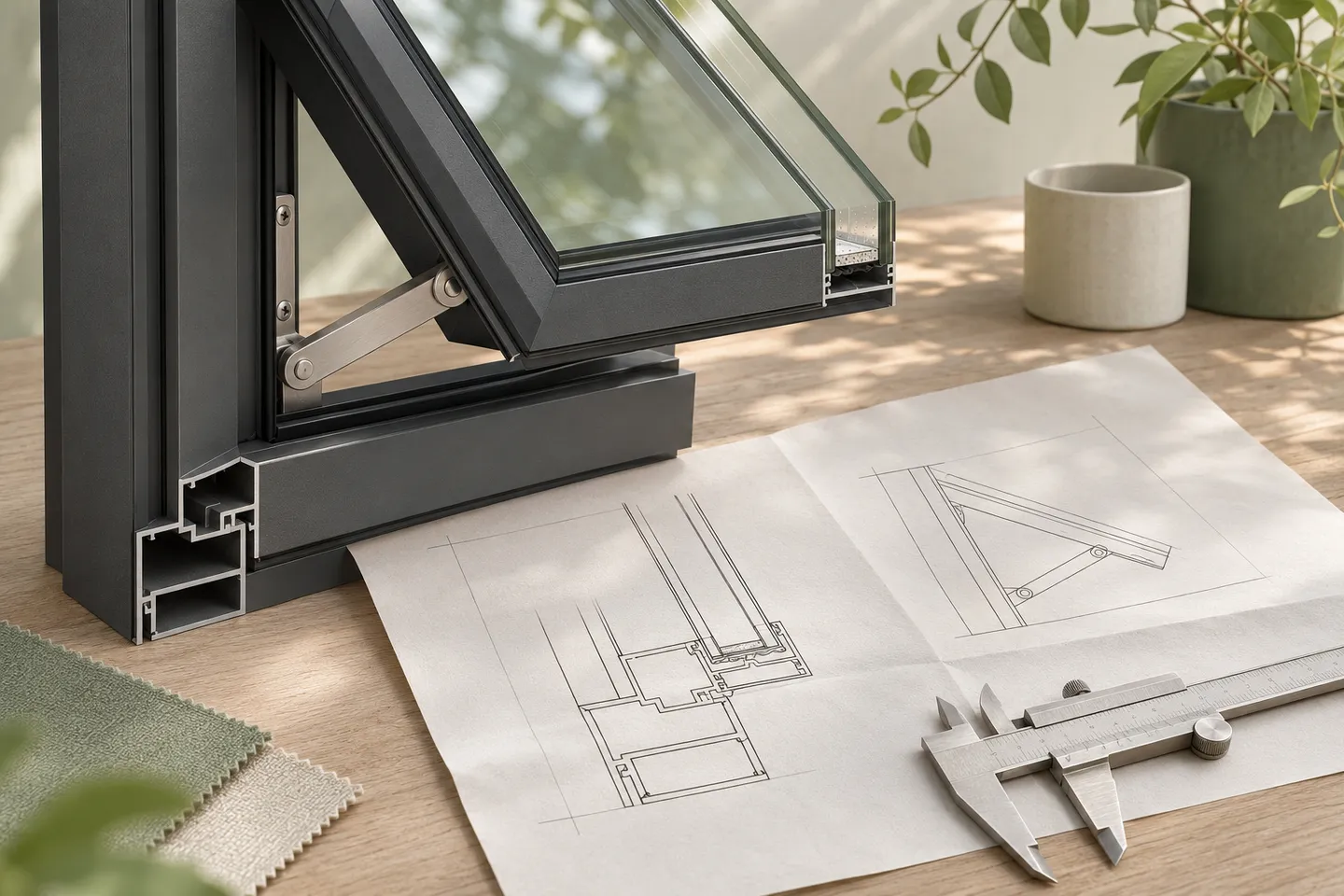
AS 2047 report checklist for each opening
Put the window schedule and the full report side by side. Copy this checklist for each opening or group of identical openings. Record the document and drawing revision used for each decision.
| Check | What to compare or record |
|---|---|
| Opening and model | Record the schedule ID and quoted model. Match the report’s system name or drawing reference to the quoted drawing. Ask for a written cross-reference if the names differ. |
| Test specimen and order size | Record tested frame width × height and the ordered frame width × height. Keep rough-opening dimensions in a separate field. Ask for the documented scope when sizes differ. |
| Opening configuration | Check whether the specimen is awning, casement, sliding or fixed. Compare the number of sashes or panels, fixed lights, mullions and opening direction. |
| Glass and hardware | Match the glass build-up, frame and sash profiles, seals, locks and operating hardware shown in the drawings and report. List substitutions for review. |
| Scope and results | Record the lab, report number, date and standard edition. Compare reported results and units with the project requirements, including wind and water where applicable. |
| Release decision | Note any discrepancy, who will resolve it and what evidence is needed. Keep the final report reference and approved drawing revision with the purchase order. |
Product, report previews and installation example
- YSA80A thermal break awning window — use the model page to identify the system and discuss the intended configuration.
- Public test-report previews — select Australia · AS 2047, then ask for the full report scope for your proposed order.
- Sydney two-storey glazing case — see the site context and glazing installation. The case does not identify the tested specimen or establish report coverage.
For the next step, use the Australian procurement brief to collect the drawings and installation information.
Identify the product behind the report
Check the manufacturer or system identification, report issuer, report date and referenced standard. Record the window or door type and the model or drawing reference. Ask the supplier to explain the relationship if the catalogue name and report identification differ. A company overview or a report-cover image is not a complete product comparison.
Compare the tested configuration
Review the specimen dimensions, opening arrangement, framing, glass and hardware details. Compare these with the intended order, including combinations with fixed lights or multiple panels. Where the proposed dimensions or design differ, request the documented basis for the claimed coverage rather than assuming it automatically transfers.
Read performance against the project brief
Review the relevant wind, water and operating-performance results against the project requirements supplied by the designer or builder. A large pressure value on its own does not describe every aspect of performance. Keep the test conditions, units and applicable configuration with the result.
Review glazing and installation separately
Ask how the glazing selection and installation details are addressed for the project. Frame test information does not settle every glass, wall-interface or site-work question. The AGWA guidance highlights product size, wind conditions, glazing, energy and installation as matters to review with the supplier and installer.
Keep a traceable order record
Maintain a table linking each opening or product group to the selected model, drawing revision, glass, hardware and applicable reports. Resolve any exceptions before the order is confirmed. Keep the agreed documents with the installation and handover information.
Related products and documents
Reference:AGWA: Compliance & Accreditation